
Electrical Panel & Breaker Upgrades in Thousand Oaks
Your electrical panel plays a central role in how power is distributed throughout your home. When the existing panel no longer provides enough capacity, has deteriorated, or has a breaker-related problem, the right solution may be an upgrade, replacement, or targeted breaker service.
We evaluate the existing electrical system to determine what actually needs attention. Whether you’re planning for additional electrical demand, dealing with an outdated panel, or experiencing a breaker problem, the goal is to identify the appropriate solution rather than automatically replacing the entire panel.
When Does an Electrical Panel Need an Upgrade or Replacement?

An electrical panel may need attention when it can no longer safely or adequately support the home’s electrical demands, or when the panel itself shows signs of deterioration or damage. New electrical equipment can also increase the demand on an existing system.
Common signs and situations include:
- Safety or Condition Concerns
- Burning smells near the electrical panel
- Scorching, discoloration, or visible damage
- Unusual heat coming from the panel
- Buzzing or crackling sounds
- A panel showing signs of deterioration
Capacity-Related Problems
- Circuit breakers that trip repeatedly
- Lights that dim when larger electrical loads turn on
- Limited space for additional breakers
- An electrical system struggling to support current demand
Older or Outdated Equipment
- Older electrical panels
- Fuse-based electrical systems
- Certain legacy or problematic panel types
Adding Major Electrical Loads
A panel may also need evaluation when you’re adding equipment that increases electrical demand, such as:
- An EV charger
- New HVAC equipment or a heat pump
- Major appliances
- A home addition or remodeling project
- Pool or spa equipment
- A generator or other major electrical equipment
Not every warning sign or new electrical load means the entire panel needs to be replaced. The existing electrical system, available capacity, equipment condition, and planned electrical demand all help determine whether the appropriate solution is a breaker repair, panel replacement, panel upgrade, or another electrical service correction.
Call for Electrical Panel & Breaker Upgrades
Panel Upgrade vs. Panel Replacement vs. Breaker Repair
A problem with your electrical panel does not always mean you need a completely new panel. The appropriate service depends on whether the issue involves electrical capacity, the condition of the panel, or an individual breaker or circuit.
| Service | What it involves | When it may be appropriate | Main goal |
|---|---|---|---|
| Panel Upgrade | Increasing available electrical capacity or modernizing the electrical service | The existing service may not provide enough capacity for current or planned electrical demand | Increase or improve electrical capacity |
| Panel Replacement | Removing the existing panel and installing a new one | The existing panel is damaged, deteriorated, outdated, or no longer suitable for the electrical system | Replace unsuitable panel equipment |
| Breaker Repair or Replacement | Repairing or replacing an individual circuit breaker or addressing its associated circuit | A breaker is faulty, damaged, repeatedly trips, or will not operate properly | Correct a breaker or circuit-specific problem |
Which solution is right?
The right solution depends on what is actually happening with the electrical system.
A breaker problem doesn’t automatically mean the entire panel needs replacement. If the issue is limited to a faulty breaker, breaker-level service may be sufficient. If the panel itself is no longer suitable, replacement may be appropriate. If the home needs additional electrical capacity, an upgrade may be the better solution.
Electrical Panel Upgrades
An electrical panel upgrade can increase the available capacity of a home’s electrical system and help support current or planned electrical demand. An upgrade may be considered when the existing service is no longer suitable for the home’s electrical needs or when major electrical additions are being planned.
Common situations that may lead to a panel upgrade include:
- Insufficient electrical capacity
- Limited space for additional circuits
- Adding an EV charger
- Installing new HVAC or heat-pump equipment
- Major kitchen appliances or other high-demand equipment
- Home additions or remodeling projects
- Adding pool, spa, generator, solar, or battery equipment
100-Amp to 200-Amp Panel Upgrades
Moving from a 100-amp electrical service to a 200-amp service is one type of panel upgrade that may be appropriate when a home’s electrical demand exceeds what the existing service can adequately support.
However, a 200-amp upgrade is not automatically necessary for every home. The appropriate service capacity depends on the existing electrical load, electrical equipment, available capacity, and planned additions.
Electrical Panel Replacement
An electrical panel does not always need more capacity to need replacement. In some cases, the concern is the condition, age, or suitability of the existing panel itself.
Panel replacement may be appropriate when:
- The panel has visible damage or deterioration
- Electrical components show signs of overheating
- The panel has recurring breaker or connection problems
- Replacement parts are difficult to obtain or incompatible with the existing equipment
- The existing panel is an older or problematic type
- A fuse-based system is being converted to a modern breaker panel
- The existing equipment is no longer suitable for the home’s electrical system
A panel replacement can sometimes retain the home’s existing service capacity, while other projects may involve a broader electrical service upgrade. The appropriate approach depends on the condition of the existing equipment and what the electrical system needs.
Replacement Doesn’t Automatically Mean More Amperage
This distinction is important.
Panel replacement and service-capacity upgrade are related services, but they are not necessarily the same project. A homeowner may need a new panel because of the condition or type of existing equipment without necessarily needing to increase the home’s electrical service capacity.
Likewise, when additional capacity is required, the project may involve more than simply replacing the panel.
Call a licensed Electrician in Thousand Oaks
Circuit Breaker Repair & Replacement
A circuit breaker that trips repeatedly, will not reset, or shows signs of damage may need attention. The breaker itself can be the problem, but the underlying circuit or electrical system may also need to be evaluated.
Common breaker-related problems include:
- A breaker that trips repeatedly
- A breaker that will not reset
- A faulty or damaged circuit breaker
- Signs of overheating around a breaker
- A breaker that no longer operates properly
- A breaker or circuit that cannot safely support the connected load
When Does a Breaker Need to Be Replaced?
A breaker may need replacement when the breaker itself is faulty, damaged, or no longer operating correctly. However, replacing the breaker without addressing an underlying circuit problem may not solve the issue.
That’s why the electrical system should be evaluated before deciding whether the appropriate repair is breaker replacement, circuit repair, panel work, or a broader electrical upgrade.
For electrical problems that extend beyond the panel or breaker system, see our Electrical Repair & Troubleshooting service.
Fuse Box to Breaker Panel Conversion

Some older homes still use fuse-based electrical systems rather than modern circuit breaker panels. When the existing system is outdated, damaged, or no longer suitable for the home’s electrical demands, converting to a breaker panel may be an appropriate solution.
A fuse box conversion can involve more than simply replacing the fuse box. The existing electrical service, wiring, panel capacity, and other components need to be considered to determine what the system requires.
A Conversion May Be Considered When:
- The home still relies on an older fuse-based electrical system
- The existing equipment is deteriorated or no longer suitable
- Additional electrical capacity is needed
- The homeowner is adding major electrical loads
- The existing system needs to be modernized
The appropriate scope depends on the condition and configuration of the existing electrical system. A professional evaluation can determine whether a breaker-panel conversion, panel replacement, service upgrade, or another electrical correction is appropriate.
How We Determine the Right Panel Capacity
The right electrical panel capacity depends on how much electricity the home uses now and what electrical equipment may be added in the future. A larger panel is not automatically the right solution for every property.
We consider the existing electrical system and the home’s current and planned electrical demand to determine whether additional capacity is actually needed.
Factors We Consider
- Existing electrical service capacity
- Current electrical loads
- Major appliances and equipment
- Available space for additional circuits
- Planned additions or remodeling
- EV charging equipment
- HVAC or heat-pump equipment
- Pool, spa, generator, solar, or battery equipment
The goal is to match the electrical service to the home’s actual needs. Depending on what we find, the appropriate solution could be a breaker repair, panel replacement, panel upgrade, or broader electrical service upgrade.
Why Panel Capacity Matters
Adding new electrical equipment without considering the available capacity can create problems for an already heavily loaded electrical system. Evaluating the existing service first helps determine what the system can support and whether an upgrade is necessary.
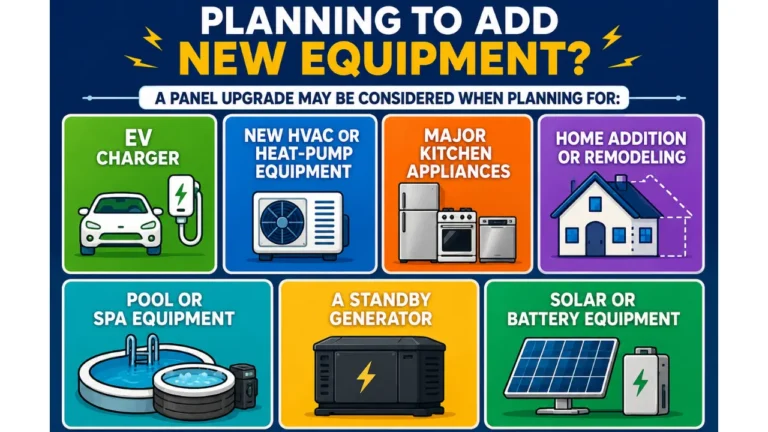
When New Electrical Loads May Require a Panel Upgrade
Adding major electrical equipment can increase the demand placed on a home’s electrical system. Before adding a new load, the existing panel and available electrical capacity should be evaluated to determine whether the system can support it.
A panel upgrade may be considered when planning for:
- An EV charger
- New HVAC or heat-pump equipment
- Major kitchen appliances
- A home addition or remodeling project
- Pool or spa equipment
- A standby generator
- Solar or battery equipment
Does Adding New Equipment Always Require a Panel Upgrade?
No. The need for an upgrade depends on the home’s existing electrical service, current load, available capacity, and the requirements of the new equipment.
For example, adding an EV charger does not automatically mean the electrical panel must be upgraded. The existing system should be evaluated first to determine whether sufficient capacity is available. For dedicated EV charging installation, see our EV Charger Installation service.
When additional capacity is necessary, the appropriate solution may involve a panel upgrade, service upgrade, or another electrical modification.
Do you have a plan?
What to Expect During a Panel Upgrade
A panel upgrade involves more than installing a new electrical panel. The existing electrical system, required capacity, connected circuits, and project requirements all need to be considered before the work is completed.
1. Evaluate the Existing Electrical System
We review the existing panel, service capacity, connected circuits, and electrical equipment to understand the current system.
2. Determine the Appropriate Upgrade
Based on the electrical system and planned demand, we determine whether the project calls for a panel upgrade, replacement, service upgrade, or another electrical solution.
3. Prepare for Required Permits or Utility Coordination
Depending on the scope of the work, permits, inspections, and coordination with the local utility may be required.
4. Complete the Panel or Service Work
The appropriate panel, breakers, and related electrical components are installed or replaced as required for the project.
5. Test the Electrical System
The completed work and affected circuits are tested to verify that the electrical system is operating properly.
6. Complete Required Inspection
When an inspection is required for the project, the necessary inspection process is completed as part of the work.
Related Panel & Electrical Services
Panel work can involve more than the main electrical panel itself. Depending on the home’s electrical system and planned equipment, other panel-related services may also be appropriate.
Subpanel Services
A subpanel can provide additional circuit space in certain situations when the existing electrical system and available capacity support it. Whether a subpanel is appropriate depends on the home’s electrical service and the electrical loads being added.
Surge Protection
A whole-home surge protection device can help protect connected electrical equipment from voltage surges. Surge protection is a separate consideration from increasing panel capacity, but it may be incorporated into broader panel or electrical-service work when appropriate.
For homes adding significant electrical equipment, the existing panel and service should be evaluated first to determine what combination of electrical work is actually needed.
Older & Problematic Electrical Panels
Some older electrical panels may deserve closer attention because of their age, condition, design, or known history. A panel that appears outdated does not automatically mean it needs to be replaced, but certain equipment may warrant professional evaluation.
Panel Types That May Need Evaluation
Older homes may contain panel equipment associated with brands or product lines such as:
- Federal Pacific
- Zinsco
- Pushmatic
The condition and characteristics of the specific panel matter when determining whether repair, replacement, or a broader electrical upgrade is appropriate.
Other Signs of a Problematic Panel
A panel may also need attention when you notice:
- Visible corrosion or deterioration
- Scorching or discoloration
- Unusual heat
- Buzzing or crackling
- Repeated breaker problems
- Physical damage
- Components that are no longer suitable or compatible
If you’re unsure about an older electrical panel, professional evaluation can help determine whether the existing equipment can remain in service or whether panel replacement or an electrical service upgrade is appropriate. If you notice smoke, active sparking, or another immediate electrical hazard, see our Emergency Electrical Services
Why Choose Us for Panel & Breaker Services
Panel and breaker work affects the electrical system that distributes power throughout your home, so the work should be handled by qualified electrical professionals who understand both the equipment and the system around it.
Licensed Master Electricians
Our electrical work is handled by Licensed Master Electricians with experience working on residential electrical systems, including panel and breaker services.
Union-Trained
Our Union-Trained background provides a strong foundation in electrical installation, safety, and practical troubleshooting.
IBEW-Backed Knowledge
Our electrical knowledge is supported by an IBEW-backed training background, bringing established electrical practices to residential electrical work.
Owner-Operated
As an Owner-Operated company, we maintain direct involvement in the work and customer experience.
Bonded & Insured
We are Bonded & Insured, providing homeowners with an additional layer of confidence when choosing an electrical service provider.
Founded by Charles J. Hutchinson
The company was Founded by Charles J. Hutchinson and has been serving customers since 2015.
Warranty on Our Work
Our Warranty on Our Work provides additional confidence in the electrical services we perform.
Serving Thousand Oaks and Nearby Communities
We provide electrical panel and breaker services throughout Thousand Oaks and nearby communities in the surrounding area.
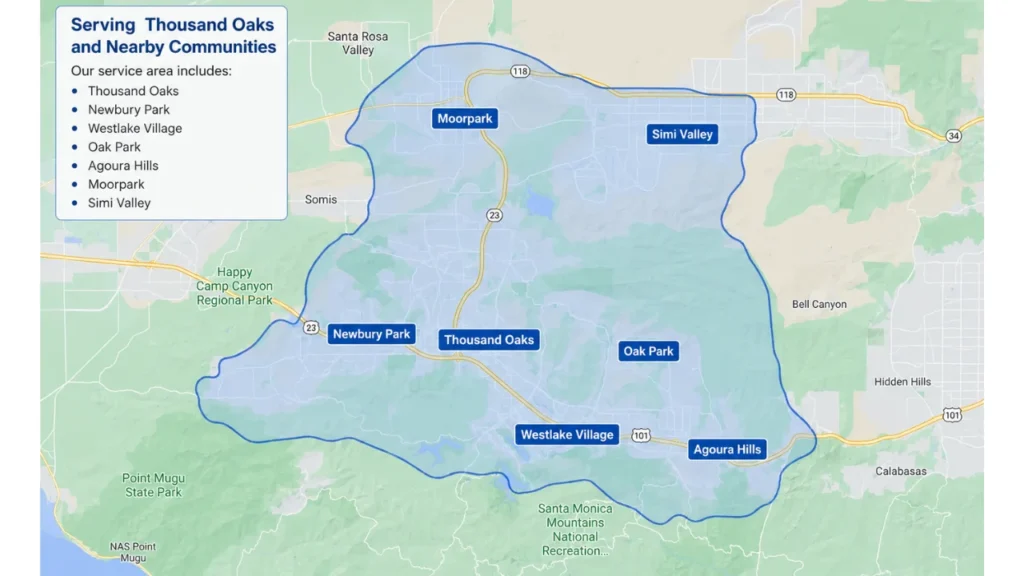
- Thousand Oaks
- Newbury Park
- Westlake Village
- Oak Park
- Agoura Hills
- Moorpark
- Simi Valley
Whether you’re planning a panel upgrade, replacing an older electrical panel, converting a fuse box, or dealing with a breaker problem, our panel and breaker services are available throughout these communities.
Electrical Panel & Breaker FAQs
Do I need to upgrade my electrical panel?
Not necessarily. An upgrade may be appropriate when the existing electrical service cannot adequately support the home’s current or planned electrical demand. The panel’s condition, available capacity, and planned equipment should be evaluated before deciding whether an upgrade is needed.
What is the difference between a panel upgrade and panel replacement?
A panel upgrade generally increases or modernizes the electrical system’s capacity, while a panel replacement replaces the existing panel because of its condition, age, type, damage, or suitability. A project may involve both, but they are not automatically the same.
Do I need a 200-amp electrical panel?
Not every home needs 200-amp service. The appropriate capacity depends on the home’s electrical load, existing service, equipment, and planned additions. Evaluating the electrical system can help determine whether 200-amp service or another configuration is appropriate.
Can a circuit breaker be replaced without replacing the entire panel?
Yes, if the problem is limited to the breaker and the existing panel remains suitable. However, a repeatedly tripping or damaged breaker can sometimes indicate an underlying circuit or electrical-system problem, so the cause should be evaluated before replacing the breaker alone.
Do I need a panel upgrade for an EV charger?
Not always. It depends on the existing service capacity and the home’s current electrical load. Evaluating the available capacity can determine whether the existing panel can support the EV charger or whether an upgrade or another electrical solution is needed.
Can a fuse box be replaced with a breaker panel?
Yes, a fuse-based electrical system can potentially be converted to a breaker panel. The existing service, wiring, grounding, capacity, and overall electrical configuration should be evaluated to determine the appropriate scope of the conversion.
How long does an electrical panel upgrade take?
The time varies depending on the existing electrical system and project scope. Utility coordination, permitting, and inspection requirements can also affect the timeline. Straightforward panel work may take less time than a project involving broader service modifications.
Does an electrical panel upgrade require a permit?
Permit requirements depend on the project scope and local requirements. The City of Thousand Oaks lists replacement of electric services up to and including 200 amps among its Building Division permit application types. The specific project should be classified to determine what permits are required.
Need an Electrical Panel or Breaker Upgrade?
Whether you’re dealing with an outdated panel, limited electrical capacity, a faulty breaker, or planning a major electrical addition, the right solution starts with understanding what the existing electrical system needs.