
Signs Your Electrical Panel Is Outdated and Unsafe
I opened an electrical panel last week in a Newbury Park home. The breakers were warm to the touch. The homeowner had no idea anything was wrong.
That panel was a Federal Pacific model from 1979. These things are notorious for failing to trip during load conditions. They’re a fire risk sitting in your garage or utility room.
Your electrical panel is the heart of your house’s electrical system. When it’s outdated or unsafe, everything downstream is at risk. But most homeowners don’t think about their panel until something goes wrong.

I’ve worked on thousands of panels across Thousand Oaks. Older homes still have the original equipment from when they were built. Some are 40 or 50 years old now.
Here’s the thing. Panels don’t usually fail dramatically. They decline slowly over time. Warning signs appear that most people miss or ignore.
What Qualifies as an Outdated Electrical Panel
Age alone doesn’t make a panel unsafe. I’ve seen 30-year-old panels in perfect working order. But certain factors definitely put your panel in the outdated category.
Panels built before 1990 need attention:
Technology and safety standards have changed dramatically. Modern circuit breaker panels include features older models lack. They’re built to handle today’s electrical demands better.
Many homes in Thousand Oaks have panels rated for 100 amps. That was standard back then. But modern homes need 200 amps to run safely.
Specific brands are known problems:
Federal Electric panels sold millions of units between the 1950s and 1980s. Research shows their breakers fail to trip up to 60% of the time. That’s a serious fire hazard.
Zinsco panels have similar issues. The breakers fuse to the bus bars over time. When this happens, they can’t shut off power even during dangerous conditions.
I find these panels regularly in homes around Thousand Oaks Boulevard and the older sections of town. If you have one, replacement should be your top priority.
Fuse boxes are outdated by definition:
Some homes still have fuse boxes instead of breaker panels. Fuses work, but they’re not designed for modern electrical loads. They also tempt people into dangerous practices.
I’ve seen homeowners replace blown fuses with pennies or aluminum foil. This completely defeats the safety system. The circuit can overheat without any protection.
Undersized panels can’t keep up:
Your panel needs capacity for your actual electrical usage. A 100-amp panel might’ve been fine in 1975. Now you’ve got HVAC, computer equipment, and kitchen appliances running simultaneously.
The circuit breaker panel trips and shuts off power because it’s trying to protect your wiring. That’s better than heating. But it shows your panel can’t handle your needs.
Common Alarming Signs Your Electrical Panel Needs Attention
Most people miss the early signs. They assume occasional issues are normal. But your electrical panel should work without any drama.
Breakers that trip frequently:
A tripped breaker now and then isn’t necessarily a crisis. But if you’re resetting breakers weekly or daily, something’s wrong.
The circuit may be loaded. Or the breaker itself could be faulty. Older breakers wear out and become sensitive over time.
I helped a family on Erbes Road last month. Their main breakers kept tripping every few days. The panel was original to their 1982 home. We found corrosion on the bus bars causing poor connections.
Lights that flicker or dim:
You turn on your air conditioner and the lights dim for a second. That’s voltage drop from a loaded circuit. Your panel may not have enough capacity.
Flickering lights throughout the house indicate a bigger problem. It could be loose wiring in the panel. Or the main connection could be failing.
Don’t ignore this warning sign. Loose connections create heat. Heat damages components and starts fires.
Burning smell coming from the panel:
This one’s serious. Any burning odor near your breaker box needs immediate attention. It means something inside is heating.
I got an emergency call from a homeowner in Dos Vientos. They smelled something burning near the garage. I found a breaker that had failed internally and was arcing.
We shut off power immediately and replaced the panel the next day. Another week and that house would’ve had a fire.
Scorch marks or discoloration:
Check your panel for dark spots or burn marks. These show where overheating has occurred. The damage might be just starting or already advanced.
Rust or corrosion inside the panel means moisture is getting in. Water and electricity don’t mix. This creates short circuit risks and equipment failure.
Panel feels warm or hot:
Your electrical panel should never feel hot to the touch. Slight warmth during heavy use might be normal. But if the panel or individual breakers feel hot, that’s a problem.
Heat means resistance somewhere in the connections. This gets worse over time and can cause fires.
Buzzing or crackling sounds:
Panels should operate silently. Buzzing sounds indicate loose connections or failing breakers. Crackling or popping noises are even more serious.
These sounds mean arcing is happening inside. Arcing creates extreme heat and can ignite surrounding materials.
You can’t label every circuit:
Open your panel and look at the directory. Can you tell what each breaker controls? Older panel has circuits that were added without proper documentation.
This makes troubleshooting harder. More importantly, it suggests the panel has been modified over the years. Those modifications might not be safe.
Fire and Safety Risks From Outdated Electrical Panels
Let me be direct. Unsafe electrical panels cause house fires. The National Fire Protection Association tracks this data. Electrical failures cause an estimated 13% of home fires.
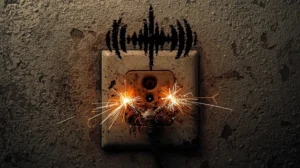
How panel failures start fires:
Faulty breakers don’t trip when they should. The circuit overheats. Wiring insulation melts. Eventually something ignites.
Federal Pacific panels are especially dangerous. Their breakers can fail to shut off even during a short circuit. The circuit stays energized while overheating.
I’ve seen the aftermath. Charred walls, melted wiring, and smoke damage. All because a panel couldn’t protect the home like it was supposed to.
Overload circuits create danger:
Modern electrical demands stress old panels. You plug in high-power appliances. The circuit is overloaded but the old breaker doesn’t respond properly.
The wiring heats up inside your walls. You can’t see it happening. By the time you notice something’s wrong, damage is already done.
Split bus panels are another concern. These older designs lack a single disconnect point. That’s a safety issue during emergencies.
Real consequences for families:
I don’t share this to scare you. But homeowners need to understand the risks. An outdated electrical panel isn’t just an inconvenience.
A family in Conejo Oaks had a panel fire two years ago. They were lucky. Everyone got out safely. But they lost their home.
The investigation showed the Federal Pacific breakers never tripped. The panel couldn’t protect them. Replacement would’ve cost maybe $2,500. Rebuilding cost hundreds of thousands.
Insurance and Resale Concerns With Old Panels
Your electrical panel affects more than just safety. It impacts your ability to insure and sell your home.
Insurance providers care about panels:
Many insurance companies won’t cover homes with certain panel types. Federal Pacific Electric and Zinsco panels are often on the exclusion list.
Some insurers will cover these homes but charge higher premiums. They know the fire risk is real. That risk gets passed to you in higher costs.
I’ve had clients denied insurance because of their panel. They had to replace it before any company would write a policy. That’s an unexpected expense during an already stressful time.
Home sales get complicated:
Buyers’ inspectors flag outdated electrical panels. This kills deals or forces price reductions. Smart buyers don’t want to inherit an unsafe panel.
A well-maintained modern electrical panel adds value. It shows the home has been cared for properly. Buyers have peace of mind about safety.
I worked with a seller in North Ranch last year. Their home inspector found a Zinsco panel. The buyers demanded replacement before closing. The seller ended up paying for it anyway.
Getting ahead of the problem:
If you’re planning to sell within a few years, replace that outdated panel now. You’ll get more value by marketing a safe, updated electrical system.
Don’t wait for an inspection to reveal problems. Be proactive. It’s cheaper to address on your schedule than during negotiations.
Why Older Panels Struggle With Modern Demand
Life has changed since the 1970s and 80s. The electrical demands in today’s homes are completely different.
What’s changed in homes:
Back then, a typical home had a TV, maybe a window AC unit, and basic kitchen appliances. Now we’ve got central air, multiple computers, gaming systems, and smart home devices.
Home offices became standard during the pandemic. People run computers, monitors, printers, and video equipment all day. That’s continuous heavy load.
Electric vehicle chargers draw massive power. A Level 2 charger can pull 40 or 50 amps. Older panels can’t support this without overloading.
The math doesn’t work anymore:
A 100-amp service panel provides 24,000 watts total capacity. That sounds like a lot. But modern homes easily exceed this.
Your HVAC system might use 3,000-5,000 watts. Water heater adds another 4,500 watts. Kitchen appliances, computers, entertainment systems all add up fast.
Many older homes have every outlet in your home fed by just a few circuits. This creates overload situations constantly.
Modern homes need different capacity:
Most new construction uses 200-amp panels now. This provides adequate capacity for modern living. It also allows room for future needs.
When I upgrade a panel from 100 to 200 amps, homeowners notice the difference immediately. Breakers stop tripping. Lights don’t dim. Everything runs smoothly.
When Repair Is Possible vs Full Replacement
Sometimes you can repair or upgrade components. Other times, complete panel replacement is the only safe option.
Repairs that make sense:
Individual faulty breakers can be replaced if the panel itself is good. This is common with newer panels that have one problem breaker.
Adding additional circuits is possible if your panel has space. Many panels have empty slots for more breakers. We can use these for new circuits.
Tightening loose connections fixes some issues. During an electrical panel inspection, we check every connection. Loose wires get secured properly.
When replacement is necessary:
Federal Pacific Electric and Zinsco panels need complete replacement. There’s no safe way to repair these. The fundamental design is flawed.
Fuse boxes should be replaced with modern circuit breaker panels. The safety features and convenience are worth the investment.
Undersized panels need upgrading to meet modern electrical demands. You can’t make a 100-amp panel into a 200-amp panel. You need new equipment.
Panels with extensive corrosion or damage must be replaced. Once the bus bars or main connections are compromised, repair isn’t an option.
Cost considerations:
Panel replacement typically costs between $1,500 and $3,000. That depends on the complexity and whether you need service upgrades.
Compared to the fire risk and insurance issues, this is cheap. You’re protecting your home and family. You’re also avoiding costly repairs down the road.
Some utility companies offer rebates for electrical panel upgrades. Check with Southern California Edison. These programs change but can offset some costs.
How a Licensed Electrician Evaluates Panels
I follow a thorough process when inspecting panels. This catches problems before they become emergencies.
Visual inspection comes first:
I check for obvious signs of damage, corrosion, or overheating. Scorch marks, rust, or discoloration tell me a lot. I also note the panel brand and age.
The panel door should close properly. I check that all breakers are labeled correctly. Missing labels suggest modifications that might not be code-compliant.
Testing breaker operation:
I test breakers to ensure they trip and reset properly. Breakers should move smoothly with appropriate resistance. Sticky or loose breakers need replacement.
Using a multimeter, I measure voltage at various points. This shows whether connections are solid or creating resistance.
Load calculations matter:
I calculate your home’s total electrical load. This includes all major appliances, HVAC, and other demands. Then I compare this to your panel’s capacity.
If you’re using 80% or more of your panel’s capacity, you need an upgrade. The National Electrical Code requires 25% buffer for safety.
Checking for code violations:
Many older panels have modifications that don’t meet current electrical codes. Double-tapped breakers are common. This is when two wires connect to one breaker.
Missing main breakers are another code issue. Modern standards require specific disconnect capabilities. Older split bus panels often don’t comply.
My recommendation:
After inspection, I give you a clear assessment. Some issues need immediate attention. Others can be planned for the future.
I explain whether you need repairs or full replacement. I also discuss upgrade your electrical service if necessary. You get all the information to make good decisions.
Panels Commonly Found in Older Thousand Oaks Homes
Working locally for years, I know what to expect in different neighborhoods. The panel in your home probably matches patterns I see constantly.
Homes built in the 1960s and 70s:
These often have Federal Pacific Electric or Zinsco panels. Sometimes you’ll find older fuse boxes still in service. Many have split bus designs.
The Thousand Oaks Boulevard area and older sections have tons of these. I replace several every month in these neighborhoods.
1980s construction:
Panels from this era are usually 100-amp breaker boxes. They might be Murray, Square D, or General Electric brands. These are better than FPE or Zinsco.
But they’re still undersized for modern needs. They also lack some safety features in newer panels.
1990s homes:
These typically have 150 or 200-amp service already. The panels are generally in better shape. But they’re approaching 30 years old now.
Components wear out. Breakers may need replacement. Connections should be inspected and tightened. Panel replacement might not be urgent but should be planned.
What I find during inspections:
Almost every older home has some electrical panel issues. Maybe it’s just outdated capacity. Maybe it’s specific breakers wearing out.
Very few homeowners have had recent professional inspections. They don’t know what’s hiding in that gray metal box. An experienced electrician can spot problems quickly.
Don’t Ignore the Warning Signs
Your electrical panel protects your home every day. When it can’t do its job, you’re at risk. The warning signs are there if you know what to look for.
Frequent tripped breakers, flickering lights, burning smells—these aren’t minor annoyances. They’re your panel telling you it’s struggling or failing.
Many older Thousand Oaks homes need panel upgrades. If your home was built before 1990, get an electrical panel inspection soon. You need to know whether your panel is safe.
Federal Pacific Electric and Zinsco panels should be replaced immediately. Don’t wait on these. The fire risk is too real.
Panel replacement isn’t cheap. But it’s a fraction of the cost of fire damage or costly repairs. It also gives you peace of mind knowing your home’s electrical system is safe.
If you’re seeing any warning signs your electrical panel might have issues, call a licensed professional. We can inspect, test, and give you honest recommendations.
Don’t wait until something fails. Be proactive about your home’s safety. Your electrical panel is too important to ignore.
I’m ready to help you take care of your home’s electrical system. Let’s make sure your panel is built to handle modern life safely.
Pingback: Why Older Homes in Thousand Oaks Need Panel Upgrades