
I’ve been doing electrical work in Thousand Oaks for over a decade now. One thing comes up more than anything else: outdated panels.
It’s not that homeowners ignored maintenance. Most didn’t even know there was a problem until something went wrong.
The reality is simple. Homes built between 1970 and 1990 weren’t designed for how we live today.
Back then, electrical systems powered basic needs. A refrigerator, some lights, maybe a window AC unit. That was about it.
Nobody predicted we’d charge cars in our garages. Or run powerful HVAC systems through summer heat waves. Or work from home with multiple devices running all day.
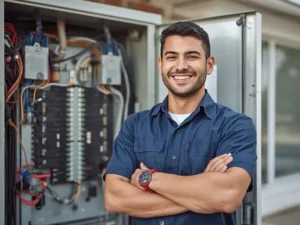
Thousand Oaks has thousands of these homes. Beautiful properties, well-maintained. But underneath, the electrical system is quietly struggling.
I see it every week. A homeowner calls because breakers keep tripping. Or the panel feels warm. Or lights flicker when the AC kicks on.
They’ll say something like, “We haven’t changed anything. Why is this happening now?”
The truth is, they have changed things. Just gradually. An EV. A pool heater. A home office. Smart thermostats. Ring doorbells. These all add up.
The original 100-amp or 125-amp panel wasn’t built for this load. It did its job perfectly for decades. But demands outgrew capacity.
This isn’t about selling upgrades people don’t need. It’s about helping homeowners understand when their system can’t keep up anymore.
In this article, I’ll walk you through why older panels struggle. What warning signs to watch for. And when an upgrade actually makes sense.
Let’s start with how these systems were originally designed.
How Electrical Panels in Older Homes Were Originally Designed
Most older Thousand Oaks homes came with either a 100-amp or 125-amp electrical panel.
At the time, that was plenty. Homes didn’t demand much electricity.
A typical house in the 1970s or 1980s ran on basic loads. Lighting throughout the home. A refrigerator. A gas water heater. Maybe a small air conditioner.
Total draw? Usually well under 100 amps, even at peak usage.
Panels had fewer breaker spaces too. Twelve to sixteen slots was common. That covered everything most families needed.
There wasn’t much to plug in. No microwaves in every kitchen. No computers. No charging stations. No home theaters.
The electrical codes at the time reflected this reality. A 100-amp service met code requirements for most single-family homes.
These panels weren’t poorly designed. They were perfectly adequate for their era.
But they were built with the assumption that power needs would stay relatively flat. That assumption didn’t hold up.
I often tell homeowners this: your panel isn’t broken. It’s just outdated.
Think of it like an old car. A 1985 sedan ran great in its day. But you wouldn’t expect it to perform like a modern vehicle with today’s safety and efficiency standards.
The same applies to electrical systems. What worked decades ago simply can’t handle modern demands.
And those demands have grown significantly.
How Modern Power Demand Has Changed in Thousand Oaks Homes
The way we use electricity today is completely different from 30 years ago.
Let me give you a real example. Last month I worked on a home built in 1978. The original panel was still in place.
The homeowner couldn’t understand why breakers kept tripping. “We’re not doing anything different,” she said.
But when we listed everything running, the picture became clear. Central AC running for hours during our heat waves. A pool pump cycling daily. Two EVs charging overnight. Multiple computers for remote work. Smart home devices throughout.
That home was pulling nearly double what the original panel was designed for.
This isn’t unique. It’s the pattern I see across Thousand Oaks.
Air conditioning alone has changed dramatically. Older homes had small window units or basic central air. Modern systems are larger and run longer during our hot summers.
Pool and spa equipment is huge here. Many Thousand Oaks homes added pools years after construction. That equipment draws significant power, especially if you have a heater.
EV chargers are the newest factor. A Level 2 charger can draw 40 to 50 amps. That’s nearly half of what an entire 100-amp panel provides.
Home offices became permanent during the pandemic. Computers, monitors, printers, lighting. All running eight hours a day or more.
Even small additions add up. LED lights use less power individually. But we have more of them, plus smart switches and motion sensors.
Kitchen appliances have evolved too. Microwaves, coffee makers, instant pots, air fryers. Most kitchens now have five or six appliances that didn’t exist in older homes.
This is why breakers trip more often. The panel is doing its job. It’s cutting power when demand exceeds safe capacity.
Flickering lights happen when high-draw appliances kick on. The system struggles to balance the load.
Homeowners often think nothing changed. But electricity use creeps up gradually. You don’t notice until the system can’t keep up anymore.
That’s when warning signs start appearing.
Common Warning Signs I See in Older Thousand Oaks Homes
After years of inspections, I can spot trouble pretty quickly. Certain issues show up again and again in older homes.
Here’s what I typically find:
Breakers tripping regularly. This is the most common complaint. If you’re resetting breakers monthly or even weekly, that’s a clear sign. The panel is protecting itself from overload.
Warm panels. Touch your panel box. It should feel room temperature. If it’s warm or hot, that indicates resistance or overloading. Not good.
Buzzing or humming sounds. Panels should be silent. Any noise suggests loose connections or struggling components. I take this seriously.
No room for additional circuits. Try adding a new appliance and you’ll find there’s nowhere to connect it. The panel is maxed out.
Double-tapped breakers. This is when two wires connect to one breaker. It’s a code violation and a safety hazard. I see it constantly in older homes.
Rust or corrosion inside. Moisture got in at some point. This damages connections and creates fire risk over time.
Old brands like Federal Pacific or Zinsco. These panels have known defects. They may fail to trip when they should. That’s dangerous.
Many homeowners think resetting a breaker fixes the issue. It doesn’t.
The breaker tripped for a reason. It’s telling you the system is overloaded. Resetting it just lets the problem continue.
I had one client who reset the same breaker twice a week for six months. When I opened the panel, the connections were scorched. We caught it before something serious happened.
If you’re seeing any of these signs, it’s worth getting an inspection. Not to scare you, but to understand what’s actually going on.
Because the risks aren’t always obvious.
Fire, Safety, and Insurance Risks Homeowners Often Overlook
Let me be clear. I’m not here to create panic. But these risks are real.
Overloaded panels generate heat. Heat damages connections. Damaged connections can spark or arc. That’s how electrical fires start.
Most electrical fires don’t happen from one big event. They develop slowly. Connections degrade over time from repeated overloading.
Old breaker mechanisms wear out too. A breaker that’s tripped hundreds of times may not work reliably anymore. It might fail to cut power when needed.
Some older panels have aluminum wiring connections. Aluminum expands and contracts more than copper. This creates loose connections over time, which increases fire risk.
Then there’s the insurance angle. Many insurance companies now flag outdated panels during inspections.
I’ve seen home sales delayed because a buyer’s insurance wouldn’t cover the property. The panel needed upgrading before closing.
Some insurers charge higher premiums for homes with older panels. Others require upgrades within a set timeframe.
This isn’t about insurance companies being difficult. They’re managing risk based on data. Older panels statistically have more claims.
The good news is these risks are manageable. You just need to address them before they become emergencies.
But here’s what surprises people. Sometimes a simple repair isn’t the answer.
Why Repairs Aren’t Always the Right Long-Term Solution
Homeowners often ask if they can just replace a worn breaker. Sometimes, yes. Other times, no.
Here’s the difference.
If a single breaker failed and the panel has adequate capacity, replacing it works fine. That’s a repair.
But if breakers trip because the panel is overloaded, replacing them doesn’t help. The problem isn’t the breaker. It’s insufficient capacity.
Think of it this way. If your car’s trunk is too small, buying better suitcases doesn’t solve it. You need more space.
Replacing one breaker might cost $150 to $300. But it doesn’t increase your panel’s capacity. Six months later, you’re dealing with the same issue.
A full panel upgrade costs more upfront. Usually between $2,000 and $4,000 depending on the home. But it actually solves the underlying problem.
You get more capacity. More breaker spaces. Modern safety features. Compliance with current codes. And you won’t need to address it again for decades.
I always tell clients: fix what’s broken if the system still works. But don’t throw money at repairs when the real issue is capacity.
That’s a losing strategy. You’ll spend more over time with repeated service calls and temporary fixes.
And if you’re planning to sell, an upgraded panel actually helps.
Electrical Panel Upgrades and Home Resale in Thousand Oaks
Home inspections almost always check the electrical panel. It’s one of the first things buyers focus on.
An outdated panel raises red flags immediately. Inspectors note it in their reports. Buyers start negotiating.
I’ve worked with several homeowners who got hit with this during escrow. The buyer’s inspector flagged a 100-amp panel with old breakers.
Suddenly there’s a $4,000 credit request. Or the buyer wants it upgraded before closing. Either way, it delays the sale.
Some buyers walk away entirely if they can’t get insurance approval. Their lender won’t fund the loan without coverage.
This happens more often than people realize, especially with older Federal Pacific or Zinsco panels. Insurance companies often refuse to cover homes with these.
On the flip side, an upgraded panel moves sales forward. It’s one less concern for buyers. One less negotiation point.
Sellers who upgrade proactively often get offers faster. Buyers appreciate not having to worry about immediate electrical work.
Even if you’re not selling now, it’s worth considering. When the time comes, you’ll be ahead of the game.
And if you’re doing the upgrade, you’ll want to handle permits correctly.
Permits, Inspections, and Code Compliance in Ventura County
Every electrical panel upgrade in Ventura County requires a permit. No exceptions.
Some homeowners don’t realize this. They hire someone who skips permits to save money. That creates problems later.
Here’s why permits matter. They ensure work meets current safety standards. They create a record for future owners. And they’re required by law.
Who pulls the permit? Your electrician should handle this. It’s part of the job. We submit plans, get approval, and schedule inspections.
The inspection process is straightforward. An inspector checks the installation after completion. They verify proper sizing, grounding, bonding, and connections.
If everything passes, you get a signed-off permit. This becomes part of your home’s records. Future buyers will see the work was done correctly.
DIY panel upgrades almost never pass inspection. The code requirements are specific and technical. Even experienced electricians occasionally have to make corrections.
I’ve been called to fix botched DIY panel jobs. Usually, the homeowner tried to save money. But they ended up spending more to redo everything properly.
Permits aren’t expensive. In Ventura County, they typically run a few hundred dollars. It’s worth it for peace of mind and legal compliance.
Speaking of proper work, let me explain what an actual upgrade involves.
What a Proper Electrical Panel Upgrade Involves
A real panel upgrade isn’t just swapping boxes. There’s a process to ensure everything works safely.
First, we do a load calculation. This determines how much capacity your home actually needs. We look at existing circuits, planned additions, and future needs.
Most modern homes need at least 200 amps. Some larger homes require more, especially with EV chargers or large HVAC systems.
Next, we select the right panel. Size, brand, and features all matter. I typically use brands with solid reputations and good warranty support.
Then we coordinate with the utility company. They need to disconnect and reconnect service. This requires scheduling and sometimes upgrading their equipment too.
We pull the permit from Ventura County. This usually takes a few days to process. Once approved, we schedule the installation.
Installation day involves shutting off power for several hours. We remove the old panel, install the new one, and reconnect all circuits. Everything gets labeled clearly.
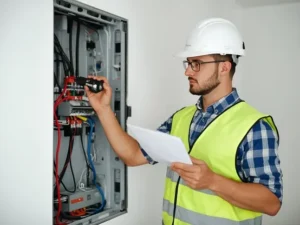
After installation, the county inspector comes out. They check our work against code requirements. Once approved, the utility reconnects service.
The whole process typically takes one to three days, depending on complexity. Most of that time is scheduling and inspections, not actual work.
Good electricians explain each step upfront. There shouldn’t be surprises. You should know what to expect and how long power will be off.
Now, you might be wondering about timing.
Should You Upgrade Now or Wait?
This is the question I hear most often. And honestly, it depends on your situation.
Sometimes waiting is okay. If your panel is working fine, you’re not tripping breakers, and you’re not planning major changes, there’s no rush.
But certain situations mean you shouldn’t delay.
If you’re adding an EV charger, upgrade first. Trying to run a Level 2 charger on an old 100-amp panel is asking for trouble.
Planning a kitchen remodel? Upgrade before you start. New kitchens draw significantly more power. You’ll need the capacity.
Installing solar panels? You’ll likely need an upgrade. Solar systems require specific panel configurations and adequate space.
If you’re experiencing frequent breaker trips, warm panels, or buzzing sounds, don’t wait. These indicate current problems that will only get worse.
Home sale in the near future? Upgrade now. It’ll help the sale go smoothly and might increase your home’s value.
Insurance issues? Address them immediately. Some insurers give 30 to 90 days for upgrades. Don’t let it lapse.
The cost is what holds most people back. I get it. But consider this: the longer you wait, the more you risk. And the cost won’t decrease over time.
Panel upgrades are also an investment. They improve safety, increase capacity, and often lower insurance premiums. They pay dividends over years.
If you’re genuinely unsure, get a professional assessment. We can evaluate your current system and give you an honest recommendation.
Final Advice from a Local Electrician
I’ve done hundreds of panel inspections across Thousand Oaks. Every home is different. But the underlying issues are usually similar.
My goal isn’t to sell upgrades people don’t need. It’s to help homeowners understand when their system is no longer keeping up.
If your home was built before 1990, your panel is probably undersized for today’s demands. That doesn’t mean it’s dangerous right now. But it means you should pay attention.
Watch for warning signs. Tripping breakers, warm panels, flickering lights. These tell you something’s wrong.
Don’t ignore them. And don’t just keep resetting breakers hoping the problem goes away. It won’t.
When you’re ready to look into it, hire a licensed electrician. Get an honest assessment. Ask questions. Understand your options.
Not every panel needs immediate replacement. But many do. And knowing where yours stands gives you control over the situation.
Thousand Oaks homes are beautiful. They’re built well. But electrical systems age like everything else. Sometimes they need updating to meet modern life.
If you’re unsure whether your panel is still safe or adequate, a professional inspection can give you clarity. It’s worth the peace of mind knowing your home’s electrical system is protecting your family properly.
We’re here to help. Whether you need an inspection, repair, or full upgrade, we handle everything from permit to final inspection.
Electrician Thousand Oaks CA
(805) 309-5414
hello@electricianthousandoaksca.com
415 N Moorpark Rd, Thousand Oaks, CA, 91360, USA
Call us to schedule an assessment. We’ll walk you through everything and help you make the right decision for your home.