
Most Common Electrical Problems in Thousand Oaks Homes and How to Fix Them
I’ve been fixing electrical issues in Thousand Oaks for over a decade. Every week, I get calls from frustrated homeowners dealing with the same problems. Most of these issues stem from how our neighborhoods were built.
Thousand Oaks grew rapidly between the 1970s and 1990s. Developers built entire communities in Lang Ranch, Dos Vientos, and North Ranch during this boom. These homes share similar construction styles and, unfortunately, similar electrical problems.
Let me share what I see most often. I’ll also explain when a simple fix works and when you need something bigger.

Home Types and Their Electrical Challenges
Most Thousand Oaks homes fall into a few categories. Ranch-style houses dominate the older sections near Thousand Oaks Boulevard. Two-story family homes fill the planned communities built in the 1980s and 90s.
Homes built before the 1980s typically have 100-amp service. That was fine back then. But modern electrical demands have completely changed. We run central air conditioning, multiple computers, smart home devices, and EV chargers now.
I worked on a house in Newbury Park last month. The family kept tripping breakers every time they cooked dinner. Their home was built in 1978 with the original electrical panel. It just can’t handle modern life.
Many older homes still have two-prong outlets throughout. This means they lack proper grounding. That’s a serious safety issue we’ll talk about later.
Breaker Tripping From Outdated Panels
This is the number one complaint I hear. Your breaker trips and you reset it. Then it happens again an hour later.
Older homes often have panels that can’t keep up. A 100-amp panel might’ve handled life in 1975. But add a home office, gaming systems, and modern appliances? You’re asking too much.
I see this constantly in homes around Janss Road. Families call me because their kitchen circuit trips when they run the microwave and toaster together. That’s overload, plain and simple.
What causes the trip:
Your circuit breaker protects your wiring from overheating. When you draw too much power, it cuts off to prevent fire hazard. Older breakers also wear out over time and become sensitive.
Sometimes the breaker itself is faulty. Federal Pacific and Zinsco panels are known problems. These outdated breakers fail to trip when they should. That creates a potential fire risk.
Quick checks you can do:
Unplug everything on the tripped circuit. Reset the breaker. If it stays on, plug items back one at a time. This helps you find what’s causing overload.
Move high-draw appliances to different circuits if possible. Don’t run your space heater and hair dryer on the same circuit.
When you need professional help:
If breakers trip frequently, call a licensed electrician. We’ll test your panel and measure your total electrical load. Many homes need an upgrade to 200-amp service.
I installed a new panel for a family in Conejo Oaks last year. They haven’t had a single tripped breaker since. Sometimes an upgrade really is the only solution.
Flickering Lights Caused by Loose Wiring
Flickering lights drive people crazy. You’re watching TV and the lights start doing a little dance. It’s annoying and it usually means something’s wrong.
Common causes in our area:
Loose connections are the main culprit. Over time, wire insulation degrades and connections work free. This is super common in homes built during the 1970s building boom.
I see this a lot in the older sections of Thousand Oaks. Homes near the original downtown area often have wiring that’s just worn out. The connections at switches and fixtures need attention.
Sometimes voltage drop causes dimming when you turn on larger appliances. Your AC kicks on and the lights dim for a second. That tells me your electrical system is struggling.
What homeowners can try:
Tighten bulbs first. Yeah, I know it sounds basic. But loose bulbs cause about 20% of the flickering calls I get.
Check your connections at light switches. Turn off the breaker first. Look for loose wire nuts or terminals. Tighten them carefully if you find any.
Why you shouldn’t ignore it:
Loose wiring creates resistance. Resistance generates heat. Heat can start electrical fires. Don’t put off dealing with flickering lights.
A client on Calle Yucca had flickering for months. When I opened the junction box, I found charred wire insulation. We caught it just in time.
Worn Outlets and Switches in Older Neighborhoods
Walk through any home built in the 1970s or 80s. You’ll probably find outlets that barely hold plugs anymore. Switches that feel mushy or don’t click right.
These components wear out with use. After 40 years of plugging things in, the internal contacts lose their grip.
Safety hazards to watch for:
Outlets that feel warm indicate a problem. The connection inside is creating resistance. This can lead to electrical fires if you don’t address it.
Discolored or scorched outlets need immediate replacement. I see this often in kitchen and laundry areas. High-draw appliances stress these connections.
Many older homes lack GFCI outlets in bathrooms and kitchens. Ground fault circuit interrupter outlets prevent electrical shocks near water. They’re required by code now but weren’t always.
Ungrounded outlets are everywhere:
Those two-prong outlets in older homes? They’re ungrounded. Modern appliances need three-prong outlets for safety. The grounding system protects you from shocks.
I replace dozens of ungrounded outlets every month. Homeowners want to plug in computers and electronics safely. Simply replacing the outlet isn’t enough though.
You need an actual ground wire present. Sometimes we can retrofit GFCI outlets for protection. Other times, rewiring is necessary.
When replacement isn’t enough:
If you’re replacing outlets frequently, the wiring itself might be bad. Aluminum wiring was common in the 1970s. It expands and contracts with heat, loosening connections.
Homes with aluminum wiring need special attention. A licensed electrician should inspect the entire system. We can install special connectors or recommend rewiring.
DIY Electrical Work Found During Inspections
This one keeps me busy. Homeowners try to save money by doing electrical work themselves. I get it, but electrical work isn’t like painting a room.
I find DIY problems during almost every thorough home inspection. Previous owners added outlets without permits. They spliced wiring incorrectly. They didn’t follow electrical codes.
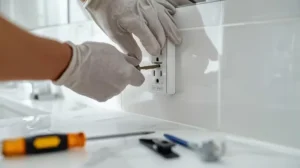
Common mistakes I see:
Improper wire connections are huge. People twist wires together without proper connectors. Or they overload a wire nut with too many conductors.
Wrong wire gauge for the circuit is another issue. You can’t put 14-gauge wire on a 20-amp breaker. That creates overheating and fire hazard.
I inspected a house in Wildwood where someone had added a hot tub circuit. They ran 14-gauge wire to a 30-amp breaker. That’s incredibly dangerous.
Why permits matter:
Permits ensure work meets safety standards. An inspector verifies everything is code-compliant. Without permits, you have no idea if work was done safely.
When you sell your home, unpermitted work can kill deals. Buyers’ inspectors find it. Suddenly you’re paying for fixes you thought were done.
Insurance concerns:
Many insurance companies won’t cover damage from unpermitted electrical work. If faulty DIY wiring causes a fire, you might be on your own.
I always tell homeowners this. Hire a licensed and insured electrician for anything beyond changing bulbs. It’s worth the peace of mind.
Overloaded Circuits Can’t Handle Modern Needs
Homes built in the 1970s weren’t designed for today’s electrical lifestyle. Back then, a bedroom had one outlet per wall. Now we charge phones, tablets, laptops, and smartwatches all at once.
How overload happens:
Each circuit has a maximum safe load. When you exceed it, the breaker should trip. But if you’re constantly near the limit, you’re stressing your wiring.
Kitchens get hit hardest. You’ve got the refrigerator, microwave, coffee maker, toaster, and maybe a blender. That’s a lot for older homes with limited circuits.
Home offices create new problems too. Computer, monitor, printer, desk lamp, phone charger. These loads add up fast.
Extension cords aren’t the answer:
I see people running extension cords everywhere. They use power strips to multiply outlets. This doesn’t solve the underlying problem.
Extension cords are for temporary use only. Running them permanently under carpets or behind walls creates hazards. The wiring can overheat and start fires.
The real solution:
Adding dedicated circuits fixes overload issues properly. We run new wiring from your electrical panel to where you need power. This spreads out your load safely.
Modern kitchens need multiple 20-amp circuits. Code requires GFCI protection for countertop outlets. Your 1975 kitchen probably doesn’t meet this standard.
Outdated Wiring Systems Need Attention
The type of wiring in your home matters more than most people realize. Wiring systems from the 1970s have known issues.
Aluminum wiring concerns:
Builders used aluminum wiring heavily during the 1970s. Copper prices were high, so aluminum was the cheap alternative. Problem is, aluminum has issues.
It expands and contracts more than copper. Connections loosen over time. Loose connections create heat. Heat creates fire hazard.
Homes with aluminum wiring have higher risk of electrical fires. That’s just a fact. Many older homes in the Westlake and North Ranch areas have it.
What to do about it:
You don’t necessarily need to rewire everything. A professional electrician can install special connectors at outlets and switches. These prevent the loosening problem.
For critical circuits, copper pigtails provide extra safety. We connect short copper wires to the aluminum, then attach devices to the copper.
Full rewiring is the gold standard. It’s expensive but improves safety dramatically. Many homeowners tackle this during major remodels.
Other outdated wiring types:
Some homes still have cloth-wrapped wiring. The insulation deteriorates and exposes conductors. This is dangerous and needs replacement.
Knob and tube wiring shows up occasionally in the oldest homes. It’s not inherently dangerous if intact. But it can’t handle modern loads and lacks grounding.
Lack of GFCI Protection Creates Risks
Ground fault circuit interrupters save lives. They detect tiny current imbalances and cut power instantly. This prevents electrical shocks.
Where you need them:
Bathrooms require GFCI outlets now. So do kitchens, garages, and outdoor spaces. Basically anywhere near water exposure.
Many older homes lack GFCI outlets entirely. I see this constantly during inspections. It’s one of the easiest safety upgrades you can make.
How they work:
GFCI protection monitors current flow. If power goes somewhere it shouldn’t (like through you), it shuts off in milliseconds.
A regular circuit breaker protects wiring. A GFCI protects people. They serve different purposes.
Simple upgrade, big impact:
Replacing regular outlets with GFCI outlets is straightforward. A licensed electrician can do a whole house in a few hours.
The cost is minimal compared to the protection. We’re talking maybe $30-50 per outlet installed.
You can also install GFCI breakers at the panel. These protect entire circuits. I recommend this approach for unfinished areas like basements.
When Repairs Are Enough vs Full Upgrades
This is the question I get all the time. Can you just fix this one thing? Or do I need to upgrade everything?
Repairs work when:
The problem is isolated to one circuit or area. Your home’s electrical panel has capacity for your needs. The main wiring system is in good shape.
I repaired a kitchen outlet last week that was causing issues. The homeowner worried they needed major work. Turned out a loose wire was the whole problem.
Sometimes replacing a few outlets or switches solves the issue. If your breaker trips occasionally but not constantly, repairs might be fine.
Upgrades become necessary when:
Your electrical panel is outdated or undersized. You have aluminum wiring throughout. Tripped breakers are a daily occurrence.
If your home inspection shows multiple electrical issues, upgrading makes more sense. Fixing problems one at a time costs more long-term.
Homes built before 1980 often benefit from full electrical upgrades. You get modern capacity, proper grounding, and code-compliant wiring.
Consider your future plans:
Adding solar panels requires panel upgrades usually. Same with EV chargers. If you’re planning these, factor them into your electrical work.
A family in Lynn Ranch wanted solar and an electric car charger. Their 100-amp panel couldn’t support it. We upgraded to 200 amps and added the circuits they needed.
Return on investment:
Electrical upgrades add real value to your home. Buyers want modern, safe electrical systems. An upgraded panel and wiring are selling points.
Insurance costs might drop too. Some companies charge more for homes with known electrical issues. Upgrading can reduce your premiums.
Electrical Safety Issues You Shouldn’t Ignore
Some problems demand immediate attention. Don’t wait if you notice these.
Burning smells:
Any burning odor near outlets, switches, or your panel means stop and call help. This indicates overheating wiring. Electrical fires start this way.
I responded to a call in Oakbrook where the homeowner smelled burning. We found a failed breaker that was arcing inside the panel. Another day and it would’ve caught fire.
Buzzing sounds:
Outlets or switches that buzz or hum have loose connections. This creates arcing and heat. Get it checked immediately.
Shocks from appliances:
Electrical shocks mean grounding problems or faulty wiring. This can be deadly. Call a licensed electrician right away.
Your home’s electrical system should work silently. If something seems off, trust your instincts.
Why You Need a Licensed Electrician
I’ve been doing this work for years. I’ve seen what happens when people cut corners. Electrical work isn’t the place to save money.
What licensing means:
Licensed electricians pass exams proving we understand electrical codes. We carry insurance protecting you if something goes wrong. We pull permits and have work inspected.
Unlicensed handymen might charge less. But you have no guarantee their work is safe. If their work causes damage, you’re stuck with the bill.
Local knowledge matters:
I know Thousand Oaks homes inside and out. I recognize the common electrical problems in different neighborhoods. This speeds up diagnosis and fixes.
I also know local inspectors and what they look for. This ensures permitted work passes inspection the first time.
Certified electricians stay current:
Electrical codes change regularly. We take continuing education to stay updated. Your uncle who worked construction in 1985 doesn’t know current safety standards.
Smart home technology, EV charging, solar integration—these are new challenges. Professional electricians train specifically for modern electrical solutions.
Schedule Your Electrical Inspection Today
Don’t wait for electrical problems to get worse. They always do. What starts as flickering lights can turn into an outage or worse.
A thorough inspection identifies issues before they become emergencies. We test your panel, check circuits, inspect outlets and wiring. You get a clear picture of your home’s electrical system.
For homes built in the 1970s through 1990s, I recommend inspections every few years. These homes are reaching the age where electrical issues multiply.
If you’re buying or selling, inspections protect your investment. Buyers want to know the home electrical system is safe. Sellers can fix problems before they derail deals.
Schedule a local electrical inspection in Thousand Oaks. We’ll help you understand what your home needs. Whether it’s simple repairs or a full upgrade, you’ll have a plan.
Your family’s safety is worth it. Let’s make sure your electrical system meets today’s demands safely.